
Digitizing freight documents: Modernizing a traditional industry

The Brief
Ernst and Young, a multinational professional services firm, has recently entered into the world of blockchain solutions. They are currently looking to help the logistics industry (an industry that has relied heavily on paper-based documents for decades) to transition into the digital world. With new blockchain-based solutions, paper will soon become a thing of the past. All companies involved in a logistics operation will be able to see a digital history of transactions and, due to the nature of blockchain, will be constantly ensured that no records have been changed nor falsified.
Overall, they are making great progress in the field, but now they need help from a user experience perspective to make sure that their solution is intuitive and user friendly for drivers, shippers, and others involved in the process.
Companies

My Role
UX Designer
Project Manager
Location
Vienna, Austria
The Research
Because this was a very specific b2b product for an industry with many different roles, we had to figure out not only what the problems were, but also who our eventual users would be. We started by researching:
1. The Document
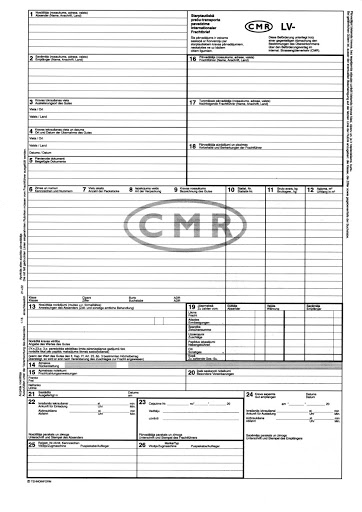
Since this project was all about digitizing the current documents used in the logistics industry, we first decided to look into the documents. We found that currently, there is one main document involved in the process. It is called the ‘CMR.’ It has been in use for over 40 years and contains all the important details and transactions in the shipment of a cargo load. The driver carries it with them during the entire journey. It must be signed by all relevant parties and each party usually requires a copy at the end of the process.
2. The Process
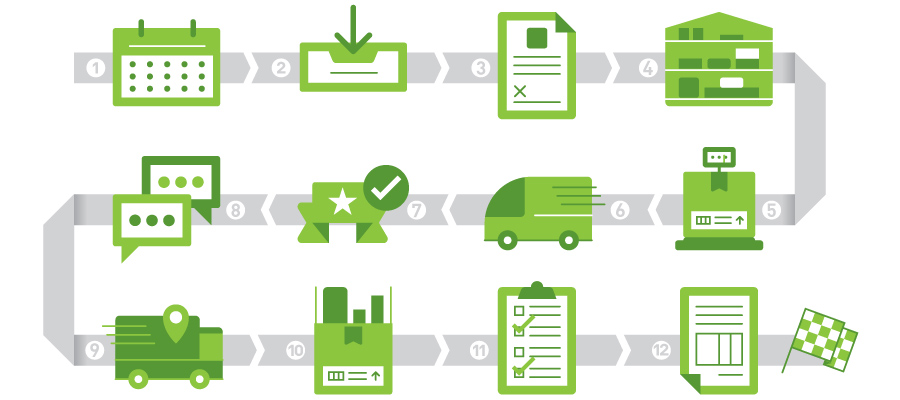
We then researched all the roles involved in the process. When a company needs to ship their goods, what do they do? Who creates a ‘CMR’ order? How does this document (and the relevant information) arrive to the driver? Where does the driver go and what do they do at each step in the shipment? What happens at the end of a shipment? How do we know that a shipment has been completed successfully?
3. The Roles
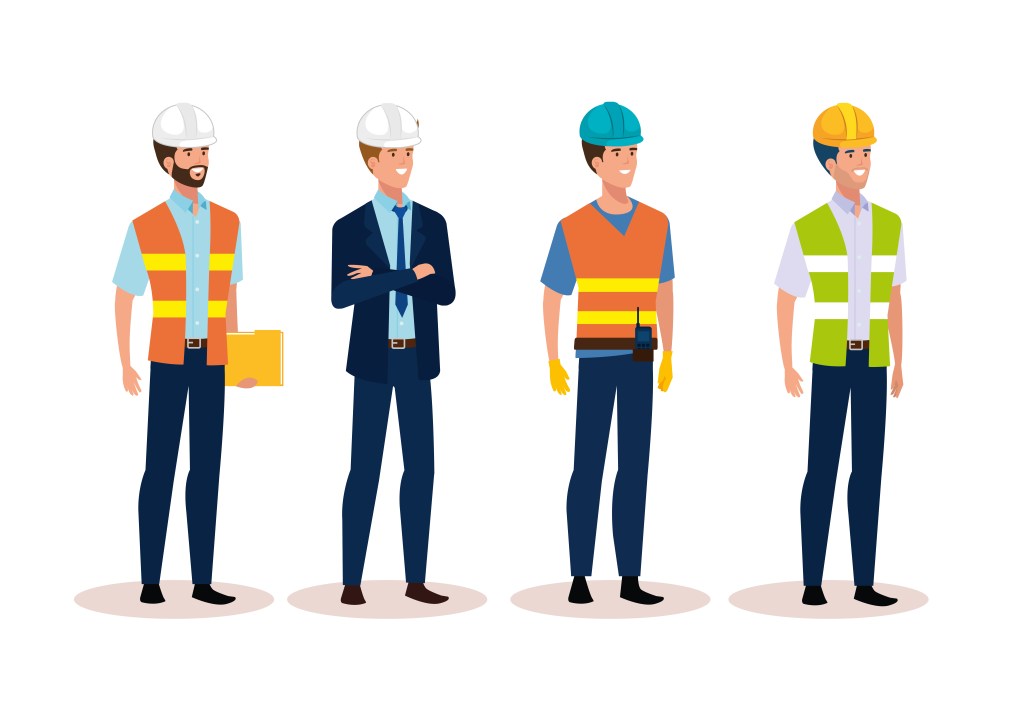
Once we understood how the process worked and what the roles are, we carried out interviews to better understand their journeys. We talked to logistics managers, drivers, warehouse managers, and others that play a key role in the process.
4. Competition
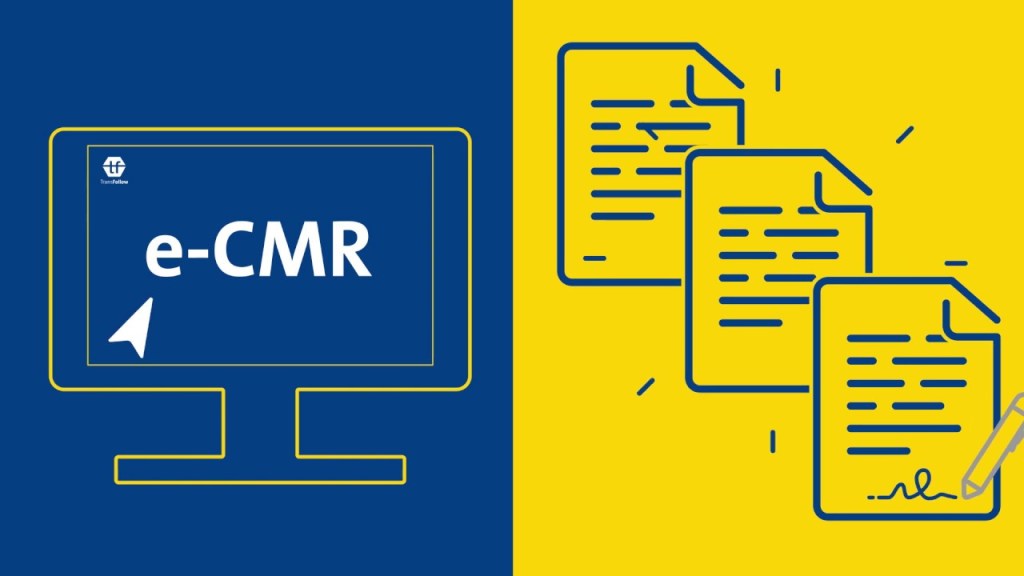
We also wanted to see if there were any other companies trying to digitize the logistics industry. What were current solutions and how much power do they have within the industry?
Analysis and Definition
After developing a better understanding of the industry and context, we set out to analyze and define the information:
1. Narrowing the Scope

In addition to our initial research, we also spoke quite a bit with representatives of EY to better understand how far along they were with their current solutions. They informed us that they already have a back-end system for creating digital “e-CMRs.” What they really needed was an intuitive interface for the users who interact with the CMR.
Having very little time to develop a prototype and knowing that the driver is currently the person responsible for the CMR, we decided to focus on a front-end solution specifically for the driver and their journey
2. User Personas and User Journey Maps
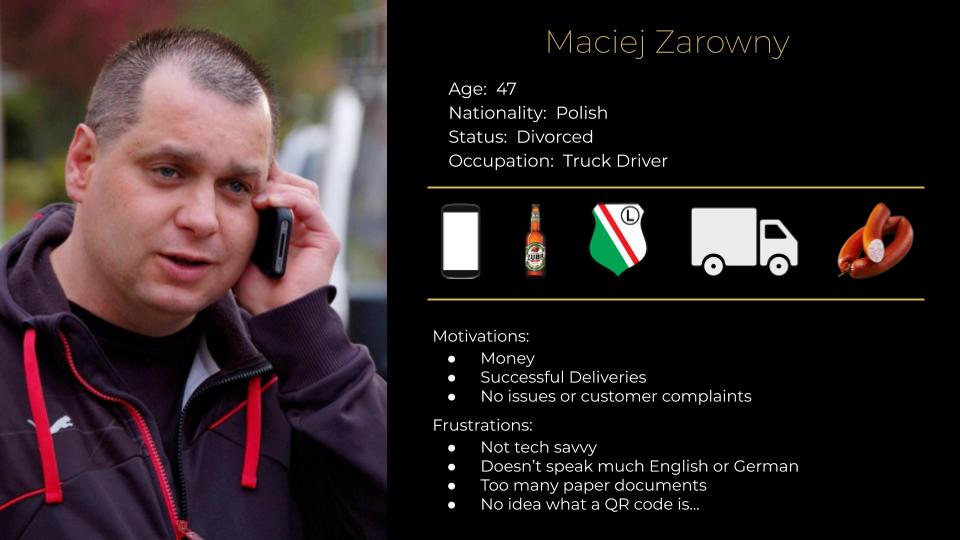
We created user personas for the drivers. From our interviews and research, we realized that although the other people involved in the process tend to be Austrian or German, the drivers are normally middle-age men from Eastern Europe. We mapped their journeys during a normal cargo shipment and identified some of the major pain points related to transactions and documentation.
The Problems
After our analysis of the information, and based on the drivers’ pain points, we identified 4 main problems:
1. Technology

Many drivers, being older and from Eastern European countries, lacked any type of deep understand of modern-technology. Many of these drivers had older mobile phones and would almost certainly not understand any ultra-advanced technological solutions.
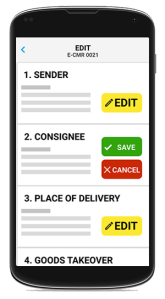
2. Editing

During the current process, the drivers very often need to edit their paper CMR document. During a normal shipment, they need to be able to add information, cross things out, and change details. Any digital solution would need to allow for additions and changes.
3. Signing

Currently, to ensure a successful shipment, the Driver needs to have a final copy of the CMR with 3 signatures: The shipper, the driver, and the receiver. Whether not we decided to use signatures, we knew that our digital solution would need to have the same information; some type of confirmation from the three parties involved.
4. Status, history and reports

In the current process, the people involved in the process need to be able to see and official copy of the document and a history of changes. They also need to be able to report problems with the shipment. We knew that the digital solution would need to allow for the same things.
Ideation and Prototyping
In order to begin solving the problems, we converted the problems into “how might we” questions:
How Might We?
- How might we design a product that is intuitive and usable by people with “low-tech” mobiles and a more basic understanding of technology?
- How might we allow the user to edit and change things at any moment?
- How might we allow the parties involved to sign the document?
- How might we give all users access to the document and it’s history?
We then started to brainstorm and ideate. The first few sessions led us to an interesting discussion and insight about mental models:
Mental Models
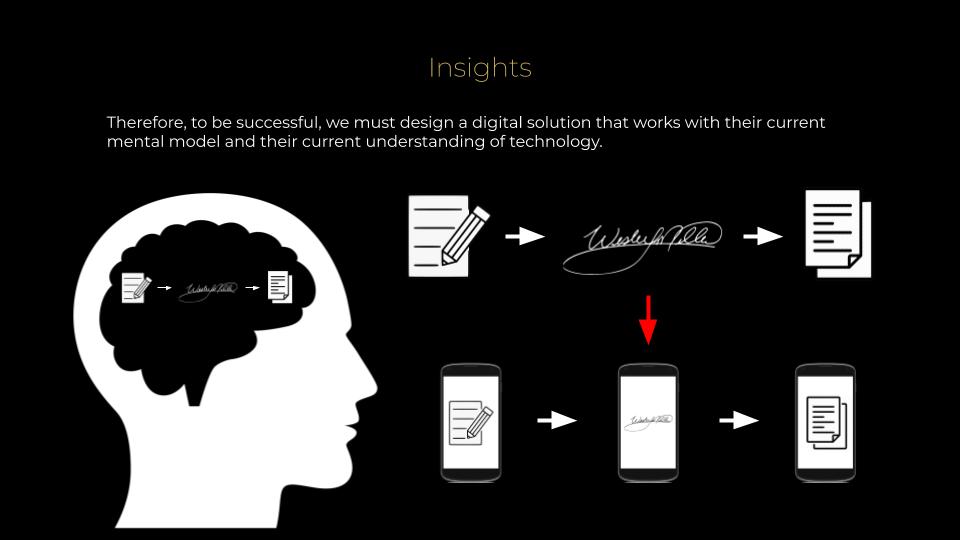
After really thinking about the profile of our users and the fact that most of them had been doing the same exact job for decades, we realized that they must have a very solid mental model of the current process.
Therefore, one of our main insights was the fact that in order to make the transition as smooth as possible, our new digital design should be able to work with their current mental model as seamlessly as possible.
Taking this insight into account, we developed our guiding design principles for this project:
Guiding Principles

Simplicity
The simpler, the better.
Representation
The more similar the digital process is to the paper based process, the better
Now that we had our insights and guiding principles, we could begin to design and prototype:
Process Flow
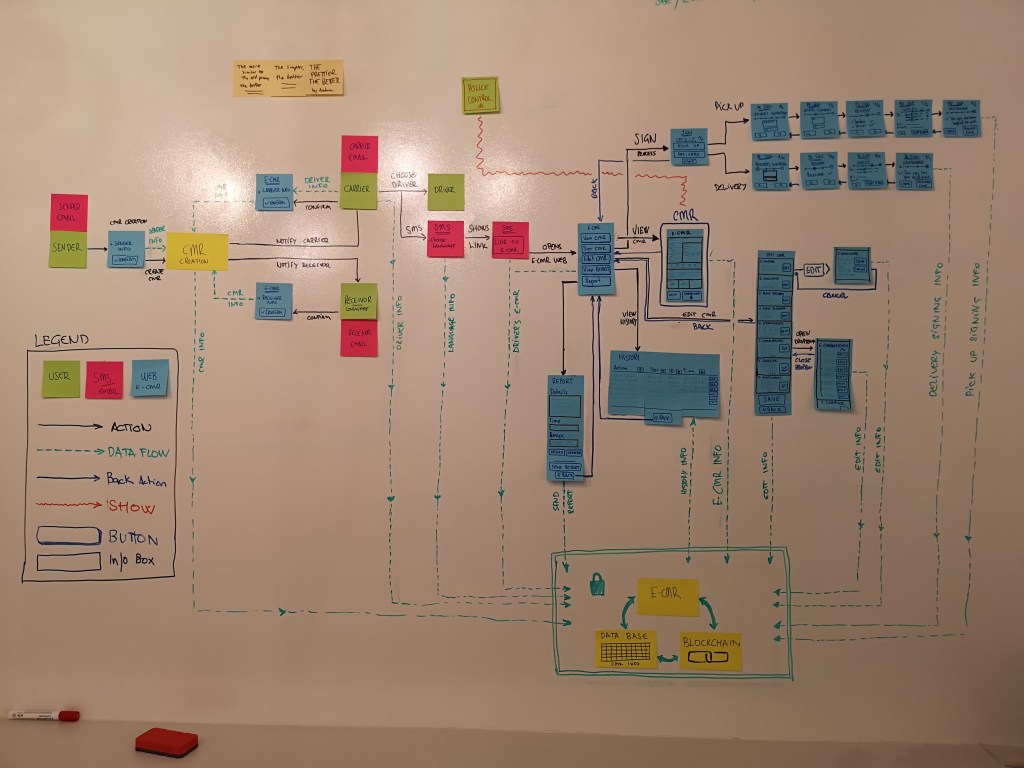
Before starting to make a real prototype, we decided to sketch the screens and incorporate them into a flowchart. This would help us understand what the screens should look like and what types of interactions we should include.
The Prototype
1. Technology
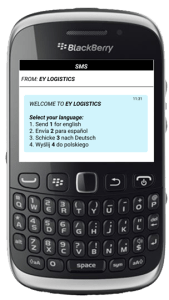
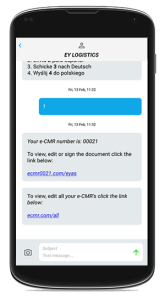
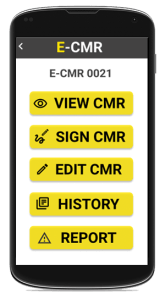
Problem
Technology and Language
Solution
A simple, intuitive interface
- sms messages and basic webpage
- works on different types of phones (smartphone, blackberry, etc.)
- choose language via sms messages
- smart link sends user to simple webpage in their preferred language
2. Editing
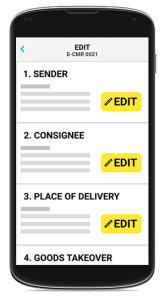
Problem
Need to edit the document in any moment
Solution
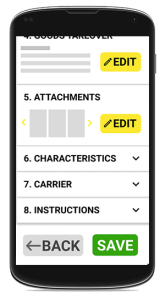
A simple, intuitive interface for editing the document:
- permission based editing
- ability to see previous state of the information during edit
- confirm and cancel changes
- all changes recorded in database
3. Signing

Problem
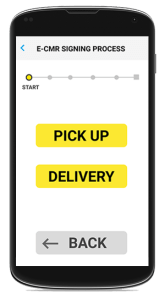
Need for easy signing of the document
Solution
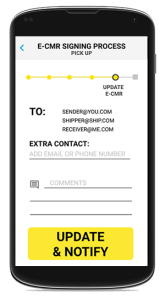
A simple, guided signature process:
- simple steps with breadcrumbs at the top
- sign with finger or input ID number
- option to add contact info and notify all parties involved
- save and send summaries
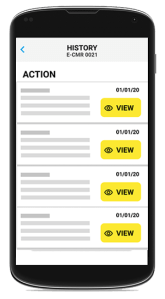
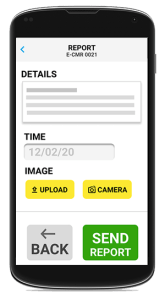
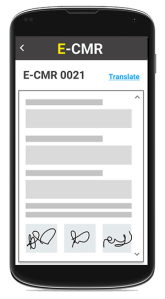
4. History and Reports
Problem
Need to visualize document and history, and to file reports
Solution
Simple functionalities for visualizing and reporting:
- E-CMR summary and pdf download
- View history of all changes saved in the database
- Report problems and attach photos
Reflections
Value for companies
Faster Transactions
Once drivers are accustomed to using our easy-sign feature, transactions are fast easy.
Monitoring and Data Security
Anyone involved in the process will be able to see an updated version of the CMR at any moment and can be sure that the contents are correct.
Easy To Learn
Because of our focus on mental models, we were able to design an easy-to-learn process that very closely represents the old physical process.
Personal Learnings

Blockchain is the future
Although we didn’t have to focus too much on the details of blockchain in our design, we got too learn a bit about how it works. Because of blockchain’s security, in the future we will be able to design interfaces and workflows knowing with confidence that the information coming from the database has not been altered in any way. This could be very important when working with large companies that need to visualize and manage large amounts of data.
Mental Models
Having studied Cognitive Science and Human-Computer interaction, I had learned a lot about the theory of mental models. But it’s very interesting to see their importance in practice. When designing for millennials for example, we know that they have a more advanced mental model of modern technology and how it works. It’s easy to design more complex interactions that work with more advanced devices. However, since we were working with middle-age tuck drivers, we had to take into account their very different mental models.
 Mark Ohren